Quick answer
The tangibility gap is the mismatch between a polished screen image and the item in the box. Static PDPs leave buyers' questions unanswered; roughly one in five online orders is returned (NRF ~19.3%). The fix is to let shoppers inspect with their eyes: rotation, zoom, and hotspots in 360°. That is trust infrastructure—not a guaranteed conversion lift.
Picture a familiar scene: you scroll an online store, choosing a jacket, new sneakers, or an expensive gadget. On screen everything looks flawless. Studio lighting, perfect angles, rich colors. You click Buy, pay, and wait for delivery.
When the courier arrives and you finally hold the item, something clicks wrong inside. Expectation does not match reality. The fabric feels rougher than it looked. The zipper feels flimsy, and on the back of the device there is a glossy logo that never appeared in any product shot.
You have hit online retail's main curse—the tangibility gap. It is the barrier between digital image and physical product. It drives millions of shoppers to abandon carts or file returns. Here is how the phenomenon works, why standard product pages stopped working, and how to give buyers back a sense of control.
Lost contact: why five beautiful photos no longer sell
Product detail pages inherited print-catalog logic: hero shot, a few alternates, a spec table, marketing copy. That worked when choice was limited. Today the buyer is spoiled for options and highly cautious.
On a page with only three or four static photos, a cascade of unanswered questions appears instantly:
- What does this bag look like from the back?
- Where are the ports—left or right?
- How deep is the pocket, and will a phone fit?
- What is the material texture on the reverse side?
When the interface stays silent, cognitive friction sets in. The shopper hesitates—and online, hesitation means leaving for a competitor, flooding support, or buying blind with a high chance of return. The problem is not bad copywriters: a static photo cannot convey a three-dimensional world by nature.
Anatomy of disappointment: numbers worth taking seriously
Retail research—including NRF and Happy Returns reports—shows e-commerce facing a massive challenge: total returns in hundreds of billions of dollars, with online order returns holding around 19.3%. Nearly one in five items bought online goes back to the warehouse. In brick-and-mortar the rate is far lower—because online shopping remains a purchase in the dark.
You cannot weigh the item, test sole stiffness, check seam density, or peek under a lid. When visual information is incomplete, human psychology often works against the seller.
The psychology of "filling in the blanks": when the buyer's brain works against you
The brain hates empty space. A beautiful front shot of a premium product triggers System 1—fast, automatic thinking. If the front looks luxurious, the mind fills in a perfect back and flawless interior seams.
When the product arrives, the illusion collapses. Disappointment follows: the buyer feels misled even when the description was technically accurate—the listing simply showed only winning angles.
Countdown timers, "only 2 left" badges, and reviews speed decisions but do not improve decision quality. People buy on emotion, cool off, find hidden flaws—and return. A sustainable business is built on deliberate product study, not hurry.
How to restore tangibility: rotation, zoom, and context
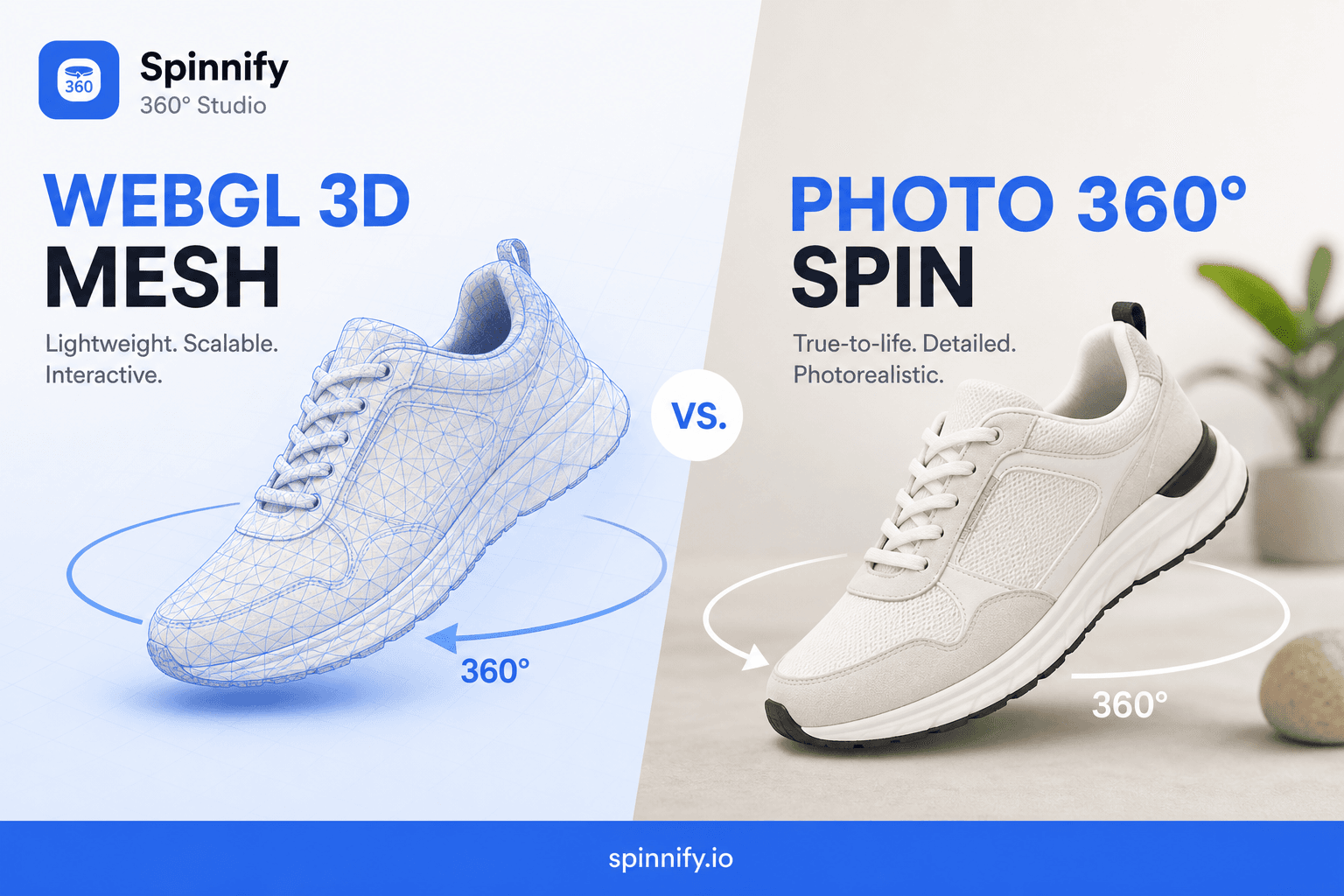
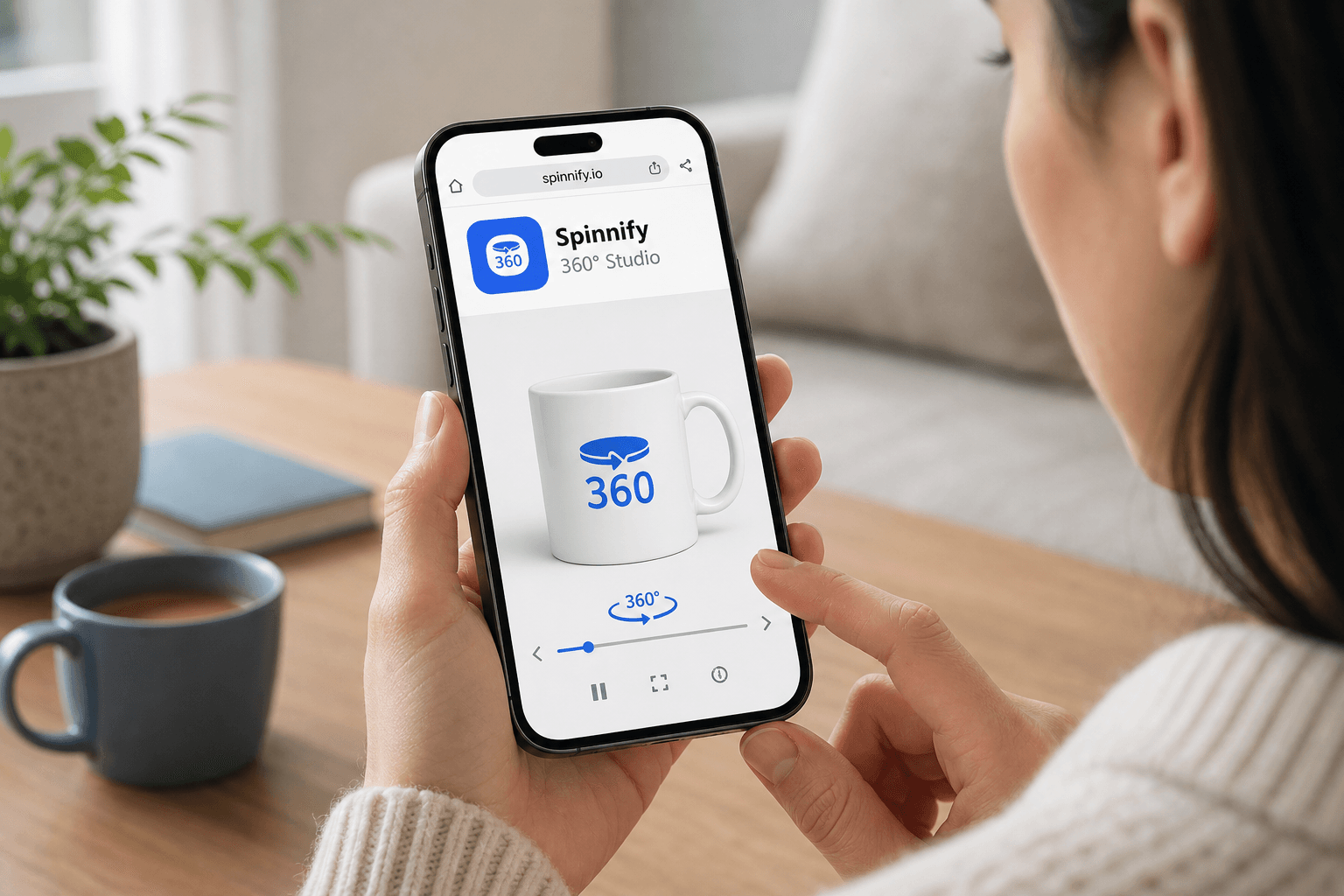
Closing the tangibility gap means changing the product-page experience: let shoppers touch the product with their eyes. Interactive 360° content on Spinnify 360° Studio is built for that job.
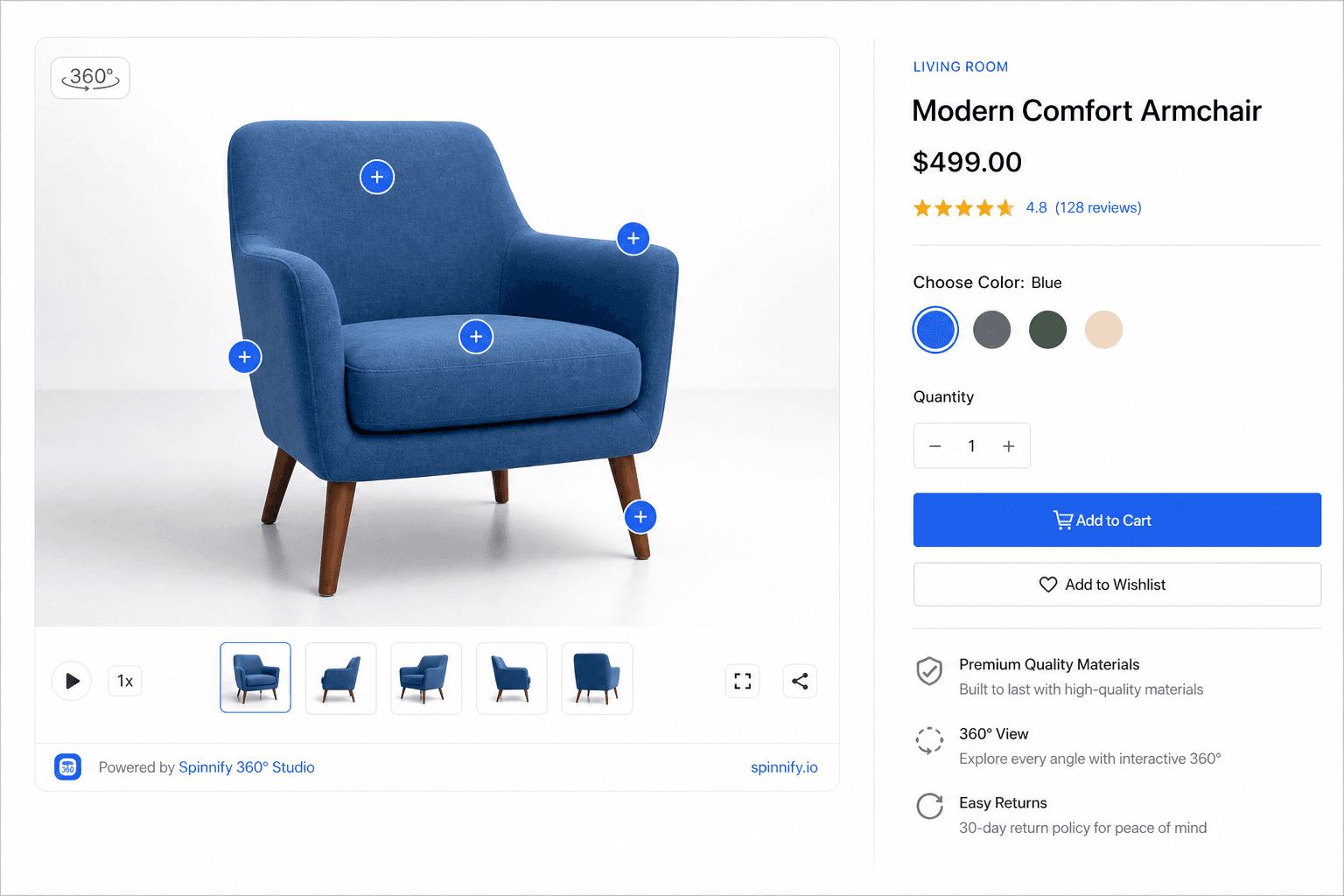
Instead of a static gallery, offer a live scenario built from three elements:
- Free rotation: the buyer turns the product to any angle—sneaker sole, jacket back, device rear panel. No hidden zones.
- Deep zoom: evaluate stitching, leather grain, plastic finish, engraving—questions answered at millimeter scale.
- Hotspots: contextual markers on the spin—click for an answer in context instead of scanning a long description.
Together, rotation, zoom, and hotspots turn a passive viewer into an active explorer. The mental model of the product becomes accurate and realistic.
Honest e-commerce: what 360° can and cannot change
What this approach can actually do
- Reduce returns citing "not as pictured" or "wrong color/texture."
- Relieve support from repetitive questions about rear panels and button placement.
- Increase engagement (watch time) on the PDP—useful for behavioral signals that support SEO.
What this approach cannot do
- Fix a warehouse shipping the wrong SKU.
- Eliminate returns when fit fails because of complex garment cut.
- Compensate for weak copy, inflated prices, or poor delivery service.
How to test your store for tangibility gap
Pull return analytics for the last six months. Read customer comments and reason codes. If you often see "looks cheaper in real life," "unclear material," "color looked different in photos," or "couldn't find where the strap attaches"—you have a classic tangibility gap.
Start a pilot: your top ten hero SKUs with frequent returns. Shoot 360° with the Spinnify mobile app and a turntable. Publish in Spinnify Studio on Shopify, WooCommerce, or Tilda. After a month, compare engagement and returns. Let customers see the truth—in the long run, honest, tangible visuals beat glossy but empty promises.